
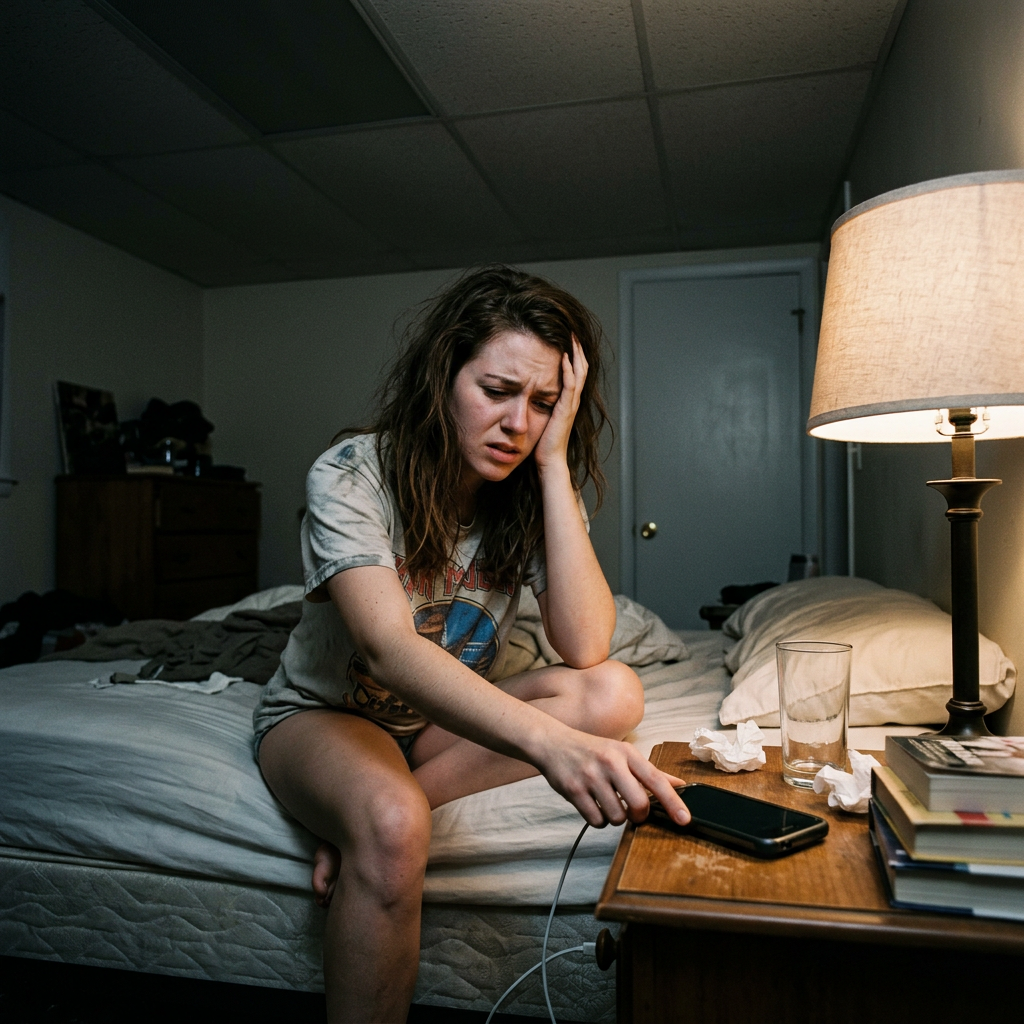
I rewrote the ad three times over three days, because the first version sounded too desperate and the second sounded too cold. What I ended up with was: “One-and-a-half-room flat on Bérkocsis Street, 62 square meters, can’t carry the rent alone anymore. Looking for a quiet, tidy roommate, non-smoker preferred. Available from the start of October.” I posted it in three groups, and two days later a woman named Vera Asztalos answered. Her profile had no photo, just an empty gray circle, and her first message read: “Good afternoon, I’d be interested in the room. When could we meet?”
I didn’t think anything of it at the time. I was just relieved someone had answered who wasn’t trying to haggle the price down immediately, and who wrote in complete sentences, capitalized, with periods at the end. My friend Noémi, who looked over the messages with me, said that was a good sign, because most people who answer these ads write three words, and get those wrong too.
The building I lived in had gone up around 1910, on the third floor, with one of those old gallery layouts where the doors to the flats all open onto a railed walkway looking down into an interior courtyard. In winter that walkway turned to ice, and the stairwell always had one weak, yellowish bulb burning that was never quite strong enough to let you see the edge of a step with any confidence. The flat itself was two rooms, a shared kitchen, a narrow bathroom. The parquet creaked with every step, especially in the stretch in front of the bedrooms, where the floor had sunk a little over the decades, and I’d gotten so used to that particular creak that I heard it even when I wasn’t walking there, like it had burned itself into my ear.
We met at a café on Mária Street. Vera arrived exactly on time, not a minute early, not a minute late, as if the timing were some kind of exercise she’d rehearsed many times before. She was of medium height, dark-haired, her hair pulled back in a straight line, wearing clothes you could have found in three different shops without being able to say for certain which one you’d actually seen them in first. Her handshake was firm, a little too cold for the end-of-September warmth outside, though I didn’t dwell on it — just assumed she had poor circulation.
We talked about her work. She said she did administrative work from home for a foreign company, which meant most of her day would pass quietly, in front of a laptop. I asked how long she was planning to stay, and she said, “as long as it works out well for both of us,” which struck me as sweet at the time. Looking back, I noticed she never actually gave me a number.
We agreed on terms. She wanted to pay in cash, every month, always on the first, which suited me fine — neither of us had to hand over bank details. A week later she moved in with two suitcases and a box that, she said, held books. I didn’t help her carry anything up; she said she’d manage on her own, and by the time I got home from work, everything was already behind her door.
My previous roommate, Kriszta, had stopped living with me back in June. On a Friday afternoon she texted that “something had come up” and that she’d collect her things over the weekend while I was at work. I didn’t push the subject, since I figured it had something to do with her boyfriend suddenly reappearing in her life, but when I called to check that she was all right, she answered short and hurried and said only, “it’s not your fault, I just can’t stand that room anymore,” before hanging up quickly. I never asked again. At the time I assumed it was simply one of those breakup-and-move periods, nothing I needed to read into. Mr. Halmi, the landlord, who lived on the ground floor and to whom I carried the rent every month, once remarked, when we were talking about Kriszta’s move-out, that “that room’s always been a bit strange, I don’t know why, the earlier tenants complained too” — but when I asked what exactly he meant, he just waved it off and said it was probably a draft from the old chimney flue, that old buildings always had one or two spots like that.
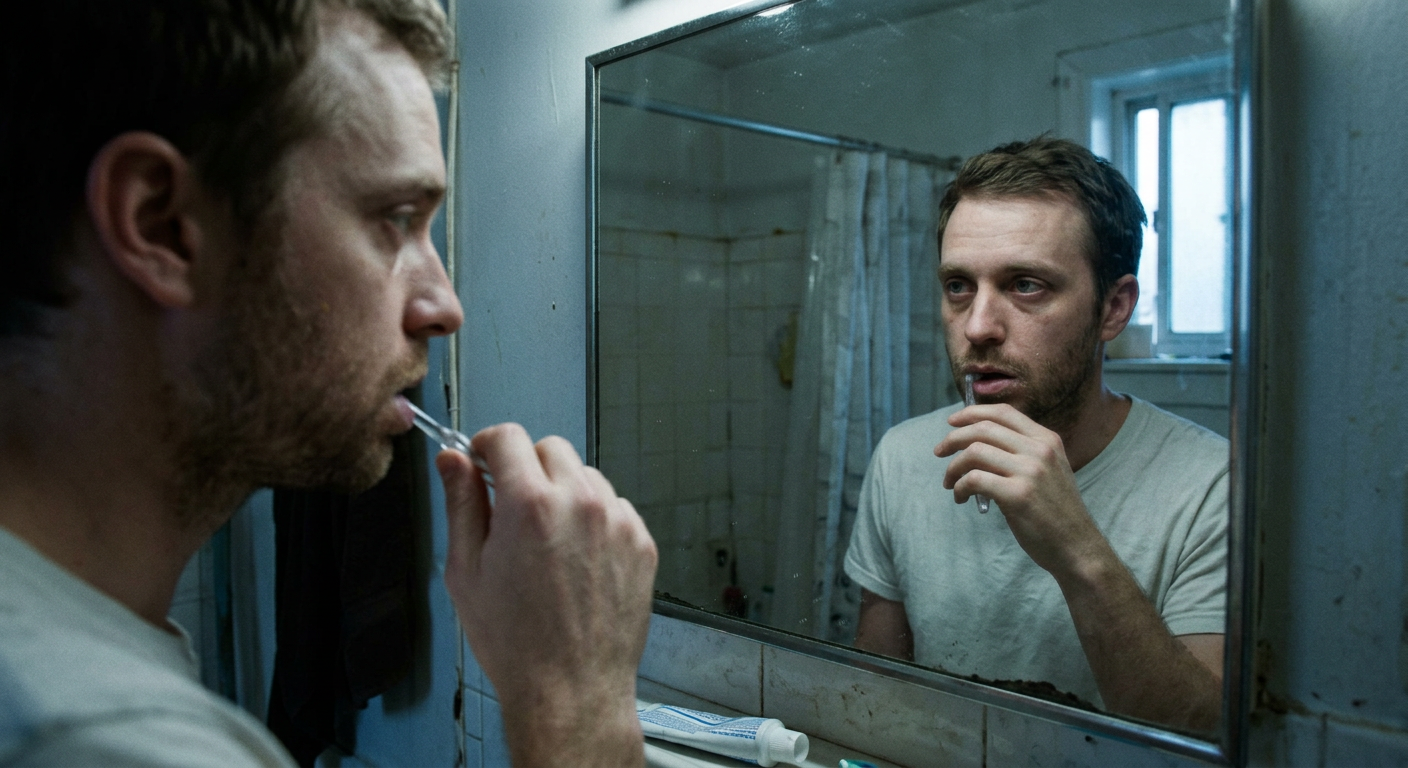
For the first few weeks I noticed nothing strange at all. Vera was quiet, exactly as quiet as you’d want a good roommate to be. She rose early, retreated to her room early in the evening, and never left a mess behind in the shared rooms — the kitchen, the bathroom. If anything, she was too tidy. Her towel hung at the exact same angle every time; her toothbrush stood precisely at the rim of its glass, never tipping in, never sliding a centimeter out of place.
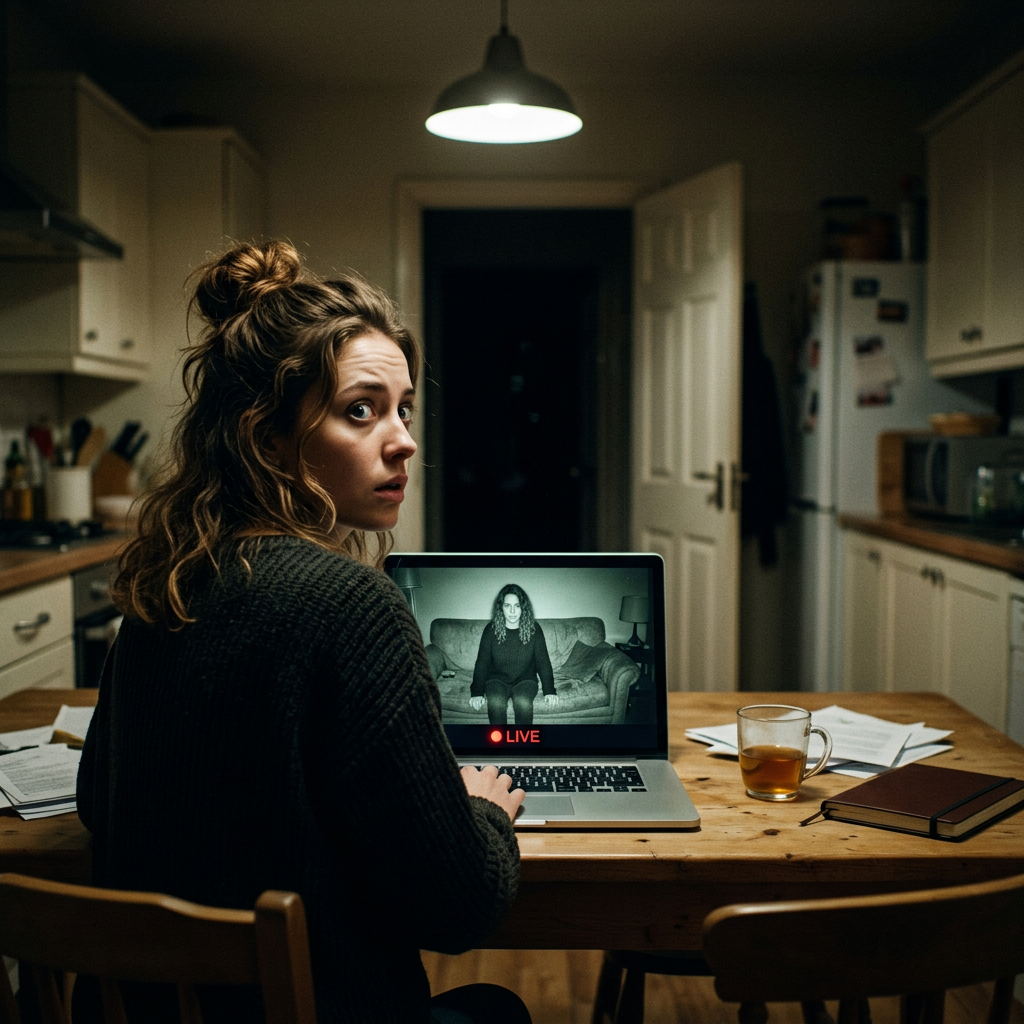
The first small thing I noticed happened on a Friday night. I’d come home from a friend’s birthday party, around one in the morning, and let myself in quietly, assuming Vera was already asleep. But a thin, steady line of light showed under her door — steady in a way that a lightbulb’s glow isn’t, usually, when someone is moving around a room. I knocked, worried something might be wrong, and Vera answered in a pleasant, questioning tone, “yes?” — as if she weren’t the least bit drowsy, as if one in the morning were the most natural waking hour in the world.
I looked in — not to intrude, just to reassure myself she was fine — and found Vera sitting on a chair, back perfectly straight, hands folded in her lap, facing the window with its blinds drawn down. No book in front of her. No laptop, no phone. Just sitting. I asked if everything was all right, and she said yes, she was just thinking something through, and thanked me for asking. I closed the door, and that night I couldn’t sleep, though at the time I couldn’t have told you exactly what had unsettled me. All I knew was that every time I shut my eyes, I saw Vera’s straight back again, her still hands in her lap, and her face, which had given nothing away in the moment but which, looking back, seemed to have taken too long to turn toward me — as though some invisible counter had needed to finish running before she could.
The next morning I mentioned it to Noémi on the phone, on my way to work on the tram. “Maybe she was just meditating,” Noémi said. “Or anxious. I know someone who calms herself down that way, just sits still.” I agreed, because it sounded reasonable, and because I didn’t want to come across as someone who turned the smallest oddity into a drama about a roommate she’d known for barely two weeks.
Noémi came over one evening at the end of October, and we drank wine and talked at the kitchen table like we always did. Vera came home partway through, said hello, chatted politely and briefly about her work, then withdrew to her room. Nothing unusual happened — but the moment her door clicked shut, Noémi lowered her voice and asked, “Is it always this cold in your kitchen?” It wasn’t cold; it was early November, but the heating worked fine, and I myself was sitting comfortably without a sweater. Noémi shook her head, as if trying to shake something off, and said she’d had a “strange feeling” come over her while Vera was near us, like the air had thickened for a second. We laughed it off — I blamed the wine — but I filed it away with everything else I didn’t know where to put.
As December approached, I started running small tests on myself, though I didn’t call them that at the time. One evening I timed how long Vera spent in the bathroom — eleven minutes, exactly as long as always, nearly to the second — but I never heard the sound of running water in the pipes, the sound I knew so well from using the bathroom myself, even though our walls were thin enough that you could hear the neighbor’s radio through them on other nights. Another time, I deliberately left a bottle of water on the kitchen table, marking its level with a pencil line on a strip of paper taped to the glass, in case it dropped even slightly if Vera drank from it. Three days later the level hadn’t changed by a millimeter — though the bottle itself had shifted position on the table twice, in ways I hadn’t left it.
But things accumulated.
Vera’s room never became messy. That alone wouldn’t have been strange — some people are naturally tidy — but as the weeks passed, I began to notice that her room showed no sign whatsoever that anyone actually lived in it. Once, when she’d left her door open while she was in the bathroom — rare, for her — I glanced in, and the room looked like a freshly cleaned hotel room nobody had checked into yet. The bed was made with military precision, corners tucked without a single wrinkle. No clothes lying out, no book, no glass. The suitcases she’d brought with her were nowhere visible — in the wardrobe, I assumed, though the wardrobe door was shut, as it always was.
After a month I started paying attention to the food in the fridge. Vera shopped — I knew that, because she occasionally came home with a grocery bag — and her things appeared in the fridge: a row of yogurts, a block of cheese, a bottle of milk, a few apples. But I never saw her eat. Not in the kitchen, not in the living room, never. When I was home and she was too, I sometimes heard her moving in the kitchen, a glass clinking, the fridge door opening, but by the time I went in, she was already gone, and the food that I was certain had been eaten was indeed gone — yet there was never a single plate, a single fork in the sink that bore any trace of her having eaten it. I always washed my own dishes. Hers simply didn’t exist.
I tried to find a reasonable explanation. Maybe she washed up quickly, before I got home. Maybe she ate in her room and rinsed some small mug of her own in a sink I’d never seen. All of that was possible, all of it rational, and every time I reconsidered it, I talked myself back down, telling myself I was overthinking things, that I only noticed these details because I was living with a stranger, and that naturally bred a certain distrust.
Then came the smell.
It didn’t appear every day, and when it did, it was hard to pin down precisely. Sometimes it was like wet earth, like stepping down into a cellar; sometimes it was sweeter, faintly rotten, like overripe fruit forgotten in a bowl. It leaked out from under Vera’s door, always for just a few minutes, and then vanished, as if someone had opened a window to air the room out. I asked her about it once, very carefully, so as not to sound rude: “I’ve noticed a strange smell sometimes, do you know what that might be?” Vera’s face stiffened for a moment — nothing dramatic, barely noticeable — and then she smiled and said it was probably a candle she’d burned; she liked spiced scents. I never once saw a candle in the flat, lit or new, or in the trash.
One afternoon, early in October, the postman delivered a registered letter that I had to sign for, since Vera wasn’t home. The addressee’s name on the envelope wasn’t “Vera Asztalos” but something else: “Veronika Asztalos,” a tax office letter, green-striped, with an official stamp. When Vera got home I showed it to her and asked whether it was really hers. For one moment — just one — something strange passed across her face, as though the question had entered territory she hadn’t prepared for, and then she smiled and said that was her official, registered name, which she never used because she didn’t like it, and thanked me for taking it. I didn’t press further, but I never heard that name from her again, and when I searched the internet once for “Veronika Asztalos,” nothing relevant came up — no social media profile, nothing that connected to the Vera I knew.
She never threw the envelope away; she took it into her room. The next day, when I emptied the kitchen bin, I found a small, charred scrap of paper at the bottom, exactly the size and shape half of an official letter might have been, though I’d never once seen Vera use a candle or a lighter anywhere in the flat, and the smoke detector mounted on the kitchen ceiling never once went off during those days.
That same month, late one evening, when I assumed Vera was already in her room asleep — though by then I already suspected that assumption was probably false — I heard a low conversation seeping through the wall from her room. I made out two voices, though I was certain the two of us were the only ones in the flat: one was Vera’s familiar, calm voice; the other was deeper, slower, as though it came from the same throat but in an entirely different register. I couldn’t make out the words, only the rhythm, a call-and-response cadence, as if Vera were talking to herself in two different voices. When I stepped closer to the door to hear better, both voices stopped at once, and the silence that followed was denser than any silence I’d known in that flat before.
It was the middle of October when things started becoming genuinely unsettling. Vera’s Instagram profile — which I stumbled onto by accident, when a former colleague of mine, a mutual acquaintance, tagged her in a post after it turned out they’d run into each other at some event — was full of photos. The profile wasn’t private, though I suspect Vera never imagined I’d find it. In the pictures Vera was at a house on Lake Balaton, a jetty in the background, a sunset, a glass of wine in her hand, smiling, completely relaxed — nothing like the way she behaved at home with me.
The photo was time-stamped September 29th, around four in the afternoon.
I scrolled further down the profile and found two older pictures, supposedly taken that same summer in a mountain town, somewhere in the Mátra hills, according to the captions. In those photos Vera looked exactly the way she did now, with not a single detail suggesting age or change, even though the photos were allegedly two years old. One comment thread under a picture read: “you look exactly the same after all this time, what’s your secret???” to which Vera — or whoever managed her account — had replied with a smiling emoji and nothing else.
That evening, after going through all of it, I couldn’t wait to ask her directly. I knocked on her door, and when she called out “yes,” I worked up the nerve to ask whether she sometimes spoke on the phone with colleagues abroad, because I’d heard her speaking another language in her room. That part was true: a few times I’d heard, through the wall, a language I couldn’t identify — not English, not German, not anything that sounded Slavic, but something deep and guttural, rising and falling like an uninterrupted chant. Vera went quiet for a moment, then said yes, she sometimes spoke with her foreign colleagues in their native language, because it was easier for them. I asked what language that was, and she said, “I don’t think you’d know it” — which, on its own, wouldn’t have been a strange answer, except for the finality in her tone, which stopped me from asking further.
On the evening of September 29th, I’d talked to Vera in the kitchen. I remembered it exactly, because she’d gotten home first that day, and by the time I arrived she was already in her room, and when she stepped out to the bathroom, she said hello to me in the hallway. I remembered it because that was my mother’s birthday, and I’d called her from the kitchen while Vera — audibly, though very quietly — moved around in her own room.
If the photo’s timestamp was correct, Vera should have been more than a hundred kilometers from Budapest that afternoon at four, at a lake house on Balaton. Yet that evening she was home, in her room, saying hello to me in the hallway.
I tried to find a logical explanation for this too. Phones automatically timestamp photos at the moment they’re taken, but upload errors happen, people post old photos and the metadata reads wrong, or maybe Vera had simply posted an older photo that day and mistyped the date in her head. I could have just asked her outright, but I was afraid it would reveal that I’d been following her social media, which would make me look like the strange, stalkerish roommate. So I kept quiet instead, and kept watching, with a steadily rising anxiety I denied even to myself.
One Sunday evening, perhaps three weeks after she’d moved in, I tried to get closer to her, thinking maybe all this unease came from the fact that we simply didn’t know each other well enough yet. I made a big batch of paprika potatoes and asked if she’d join me. Vera agreed with surprising readiness, and we sat at the kitchen table across from each other. She talked about her childhood, a small town whose name I somehow never managed to catch properly — no matter how hard I listened, the word seemed to blur in the air before it reached me. She talked about her parents, her school, in small, ordinary details that genuinely put me at ease for a moment, and I thought, maybe she’s just a lonely, slightly odd person who struggles with human connection, someone whose behavior was more sad than frightening.
That evening, when we’d finished eating, her plate was just as full as it had been at the start, only cold. I asked if she didn’t like it, and she said quickly that it was delicious, she just didn’t usually eat much at night because it kept her up. I didn’t push it, though the plate she washed that evening — the one I’d lent her — stood in the drying rack the next morning looking exactly as clean as if food had never touched it, with a kind of excessive, gleaming cleanliness my own washing-up never achieved no matter how hard I scrubbed with the sponge. I picked up the plate, and for a second my fingertips registered a strange tingling, as though the porcelain hadn’t taken on quite the same temperature as the rest of the rack — colder by a degree, maybe two, exactly the amount of warmth a human hand usually leaves behind on an object held for a long time, only reversed: as if something had taken the warmth away rather than given it.
I started doing small tests, though I didn’t admit that to myself either. One evening I deliberately came home three hours later than usual, inventing an excuse to stay out with a friend. When I got home it was around two in the morning. Light showed under Vera’s door, thin and steady, as always. I looked in — I wasn’t even disguising my concern anymore — and opened the door outright without knocking, on the pretext that I thought the light had been left on by mistake.
Vera was sitting on the chair, back straight, hands folded in her lap, facing the window. Exactly as she had been that first night. She didn’t turn toward me right away; for a few seconds — three, maybe five, though it felt long at the time — she stayed perfectly still, as if she hadn’t heard the door, though the door always creaked, I knew that sound well. When she finally did turn, her face was completely unreadable, not startled, not embarrassed, and all she said was, “Do you need something?”
I apologized, shut the door, and went back to my room. My heart was pounding, even though nothing concrete had happened — a person was sitting on a chair in her own room, at night. And yet there was something in that stillness, in those few seconds before she turned, that made every cell in my body whisper to get away from there, fast.
One evening not long after, walking home from the bookshop where I worked, I decided to take a detour and stop by the little corner grocery where Vera often shopped, thinking maybe they’d recognize her there, tell me something that might help me understand who I was living with. The cashier, a middle-aged woman who knew all her regulars, looked at me uncertainly when I described Vera — her height, her hair, her clothes — and said no such customer came to mind, though if someone shopped there every day, she’d surely remember. That threw me, because I’d seen that shop’s bags in our kitchen with my own eyes, more than once. I asked if any of the other cashiers might know her, but the woman just shook her head and said she’d worked there ten years, knew every regular by sight, and had never seen anyone at the register who matched my description.
My sister Petra, who lived with her boyfriend out in the Kelenföld housing estate, came over one afternoon in November to help me pick out a gift online for our mother, since my wifi was too slow and I’d hoped hers would be better if she shared her hotspot. Vera was home at the time, in her room, and though she didn’t come out, Petra, within a few minutes — before I’d said anything to her about Vera — suddenly shivered and asked if I wasn’t cold, because she “felt cold around her feet,” using the exact same phrase Noémi had used before, without either of them having any idea of the other’s words. When I explained who lived in the other room, Petra’s face darkened oddly, and she said she’d rather finish the search out here in the kitchen, because she “didn’t like sitting somewhere where someone could hear what we’re talking about.” I asked what she meant — whether she thought Vera could hear us through the closed door — and Petra just shook her head, as if that wasn’t quite what she’d meant to say, as if she were reaching for something harder to put into words.
The temperature of Vera’s room seemed to change in those weeks too — or at least I felt it did. Standing in front of her door, even for a few seconds, colder air seemed to leak out from under it than from the rest of the flat, even though the radiator in her room, as far as I could tell from the bills, used the same amount of gas as mine. One evening, while I was standing in the kitchen and she’d gone to the bathroom, I worked up the nerve to press my palm flat against her door, just for a moment, and the wood was colder than any other door in the flat — colder than would make sense behind a heated room.
In early December I told Noémi everything I’d gathered by then — the light, the sleeplessness, the food, the photo, the smell, the sound on the floor. Noémi listened quietly, then said, “Dóra, this is too much to ignore, but too little to know what it means. Maybe she’s just a very closed-off, maybe traumatized person who can’t sleep normally for some reason, and lies on social media because she wants to seem like someone with a life. I know people like that. But if you’re this scared of her, why don’t you just end the lease?”
It was a good question, and I didn’t have a good answer, only that I didn’t have enough money to cover the rent alone, and that nothing had actually happened yet that I could call concretely bad. Vera always paid exactly on time, was never loud, never brought anyone over, was never rude to me. Everything I’d listed was a pile of small, explainable things that meant nothing individually, but together left me with the feeling of standing in an empty room, certain someone else was there too, just not knowing where.
One night when I couldn’t sleep, and Noémi had already gone to bed, I crawled onto a forum where people wrote about housing experiences and posted, under a fake name, a question: what signs might suggest a roommate was hiding something — someone who never sleeps, never visibly eats, and whose room gives off a strange smell now and then. The answers came a few hours later, and not the way I expected. One user, whose name was “escapee85,” wrote that she’d lived with a roommate like that two years earlier, in a provincial town, and had never found out what was wrong with him, because one night she simply left the flat and never dared go back for her things, abandoning everything, and that even now the fear gathered in her at closed doors whenever she had to sleep somewhere she wasn’t alone. Another user wrote, “you can’t get these ones evicted, you can only get away from them,” and that if I had the chance to leave, I should do it now, not wait another month. The third reply was just this: “ask her when her birthday is. if she can’t say exactly, leave that night.” I didn’t know whether to take it seriously, but the next day I asked Vera when her birthday was, and after a long, unusually long pause, she said, “sometime in May,” and then changed the subject quickly. I went back to the forum two days later to write a reply, to thank them for the advice, but my post was nowhere to be found, and when I searched for the username I’d used, the system told me no such user existed, had never existed.
Around Christmas, Vera went home — at least that’s what she said, home to her family somewhere in western Hungary, though she never said exactly where. I had three days alone in the flat, and I’ll admit, it was a relief. I cleaned the shared rooms thoroughly, changed my bedding, and on the last evening, before Vera was due back, I let myself into her room.
I knew I shouldn’t have. But the key was there in the kitchen drawer — we’d each left a spare for the other in case of emergencies — and the curiosity that had built up in me over months was stronger than my manners.
The room from the inside looked exactly as it had through the crack of the door: clean, flawless, almost uninhabited. The bed was made. The wardrobe held clothes, each one evenly spaced from the next, all hanging on hangers that faced the same direction. Nothing on the nightstand — no phone charger, no glass of water, no book to read before falling asleep. A small toiletry bag tucked in a drawer held a toothbrush, toothpaste, a comb. All of it looked untouched, as if never used.
The chair I always saw her sitting in stood in front of the window, facing the blinds. I sat down in it for a moment, I don’t know why, maybe to understand what she saw when she sat there. The blinds were drawn, and through their slats only the dark of the courtyard showed. Nothing worth staring at for hours, night after night.
The armrests were cold, colder than the rest of the room, even though the heating ran the same as mine. I ran my palm along the wood and found a small, smooth hollow worn into the inner curve of each armrest, as though, over a long stretch of time, under a great deal of repeated pressure, fingers had pressed into exactly the same spot, night after night, for months, maybe years. I couldn’t explain how a chair she’d supposedly bought only a few months ago could have worn down like that, unless she’d brought it with her from somewhere else — an earlier flat, an earlier room, where she’d sat exactly like this, for exactly as long.
I looked around the room once more, now deliberately searching for anything that might reveal who this woman really was. The walls held nothing — no picture, no poster, no calendar. The only personal object I found was a small black leather-bound notebook in the nightstand drawer, but when I opened it, the pages were blank, every single one, without a single line written, as if it had never been used, or as if someone erased, every night, whatever had been written there the night before.
Then I noticed the smell, stronger than it had ever been before, since I was now standing directly at its source. Not earth, not overripe fruit. Closer to the smell of a room shut up for a long time, suddenly let back into fresh air — a stale, musty smell that was somehow, also, alive, coming from the cracks in the floor, or perhaps from behind the wardrobe.
Before I went to the wardrobe, I set my phone on the nightstand with the camera running, thinking that at least I’d have evidence of whatever I found, if I found anything at all. The recording, when I played it back later in my own room, turned strangely dark in the last ten seconds, as if the lens had fogged over, though the room, while I’d been standing in it, hadn’t been humid or steamy in the slightest. The sound on the recording was strange too: my own footsteps came through clearly, but underneath them, very quietly, ran a continuous low hum I hadn’t heard while actually standing in the room, one I couldn’t place — not the fridge, not street traffic, but something that seemed to rise out of the silence beneath the recording itself, like a second layer.
I went to the wardrobe. I didn’t want to open it — I tell myself that even now, looking back, that I didn’t want to — but my hand, as if it weren’t my own, took hold of the handle and opened it anyway.
Behind the clothes, at the back wall of the wardrobe, there was a small gap, barely noticeable, like a panel that might once have opened — an old built-in closet connected to some hollow space in the wall, or to a former chimney flue. The buildings on Bérkocsis Street were old; in the seventies many of these hidden hollows had been bricked over, though not all of them properly packed in. The gap was about a palm’s width, and the smell poured out of it, thicker than anywhere else in the room.
I didn’t look inside. I closed the wardrobe, backed out of the room, locked the door, and put the key back in the drawer, as if that could undo what I’d seen.
Vera came back two days later, exactly as though nothing had happened. She asked how my Christmas had been, and I said it was nice, thanks, and hers? She smiled and said quiet, with her family, as always.
That night, after I’d gone to bed, I pulled up the phone recording to look at it again, thinking maybe in better light something would show up that hadn’t caught my eye the first time. But the video was no longer in my gallery. The file name was still listed, the size matched exactly what I’d watched counting up on the screen while recording, the thumbnail still appeared — a small, blurred image of the wardrobe door — but when I tapped to play it, an error message appeared: “File corrupted or unsupported.” I tried another app, tried copying it to my laptop; every attempt ended with the same error. Eventually I deleted the file, because I couldn’t keep looking at that thumbnail, which seemed, every time I looked at it, to show the wardrobe door open a little wider than I remembered.
Early in January the bathroom ceiling started leaking, and Mr. Halmi sent up a painter friend of his, a man named Fekete, to find out where the damp was coming from. He arrived with a flashlight and a small stepladder, went through the flat, checked the attic space above the bathroom through the hatch, and then, passing Vera’s closed door in the hallway, stopped abruptly and asked who lived in that room. I told him it was my roommate, and that she wasn’t home at the moment — which was true; Vera had left somewhere that morning without saying where. Fekete stood in front of the door for a few seconds, pressed his hand to the doorframe as though listening for something, then said, “strange draft here,” and asked if I didn’t feel the cold a lot in that part of the flat. I said not really, and he just nodded — but when he was leaving, he turned back once more in the doorway and said, “If you ever have any trouble with that room, tell Mr. Halmi, there’s been a case or two before.” I asked what kind of case, but he was already on the stairs, and said we’d talk about it sometime, though we never saw each other again.
That sentence nagged at me for days. I called Mr. Halmi and asked what Fekete might have meant, but the landlord just laughed it off, said Fekete “always says odd things,” and that nothing out of the ordinary had ever happened in the building that he’d need to know about. I didn’t fully believe him, but there was no way to push further without sounding completely paranoid.
A few days later I brought it up again anyway, when I went to drop off February’s rent, and half-jokingly asked Mr. Halmi how many tenants had lived in that room Vera now rented, since he’d owned the building. He thought about it and said at least four tenants had come and gone over the past six years, and that, oddly, each of them had given notice fairly quickly, within a few months, though none had ever given a precise reason — only that “their situation had changed.” I asked if he remembered anyone complaining that their roommate behaved strangely, and Mr. Halmi gave me an odd look, darkening for a second as if some other, older conversation had just come to mind, then said, “Why, has Vera complained about something?” I didn’t really answer, just said no, I was only curious, and he took that as the end of the conversation, went back into his flat before I could ask anything else. The stairwell door slammed shut behind him, and the sound echoed along the gallery walkway for far longer than such a thin door should have allowed, as though the building itself held onto the sound before letting it go.
In mid-January I started quietly looking at other listings, without telling anyone, not even Noémi. I looked at two small studios, one on Práter Street and one on Köztársaság Square, both of which would have worked, the prices reasonable too. For one I’d nearly signed the lease when the landlord backed out because his own niece ended up moving in; for the other it turned out the bathroom had been built without a permit, and I didn’t want to get into that. Meanwhile my mother came down with the flu, and for two weeks I spent all my free time running over to shop and cook for her, which pushed the apartment search entirely out of the picture. By the time I got back to it, it was already late February, and my lease with Vera still had until March to run, and I told myself I could manage another two months if I just stayed careful.
Through January I tried to go on living as though nothing had changed, but I didn’t really manage it. Every sound I heard through the wall now carried new meaning. Every time I saw light under Vera’s door at night, I thought of that gap in the wardrobe, and the smell pouring out of it. I started planning that in March, when my lease ended, I’d move out, whatever it cost, and I wouldn’t tell Vera the real reason, just that work was taking me to another part of the city.
I didn’t make it to March.
The weeks that followed were especially hard. I started sleeping badly, and when I did sleep, I had strange, fragmented dreams in which I always stood in front of a closed door, knowing I shouldn’t open it, but the handle was already moving under my hand, as if something were turning it through me, not me turning it myself. I lost a few kilos without meaning to diet, and Noémi remarked once, when we met up, that I looked pale, like I hadn’t slept properly in weeks, which was true. She asked if it was because of Vera, and I just said it was work, because I didn’t want to get back into the whole thing — I had nothing new or concrete to tell her, only that the fear was taking up more and more room inside me without my being able to point to any visible cause.
Toward the end of February, on a Wednesday night, I came home late from a shift — we’d been doing inventory at the bookshop, and it had run almost until midnight. I stepped into the flat exhausted, and immediately noticed that the smell, that particular stale-sweet smell, now wasn’t coming only from Vera’s room but filled the entire flat, stronger than it had ever been before.
The light was on in the living room, though we never left it on when we weren’t there. I walked in, and Vera was sitting on the sofa — not in her own room, for the first time since she’d moved in that I’d seen her sitting in the shared rooms this late. Her hands were folded in her lap again, her face turned toward the front door, as if she’d been waiting for me, for exactly this moment, exactly this arrival.
“Hi,” I said, trying to keep my voice from shaking. “Everything okay?”
“We need to talk about something,” Vera answered, and her voice sounded different now than it ever had before — not harsher, not more threatening in its actual words, but there was a layer in it, a sub-audible resonance I hadn’t noticed before, as though two voices were speaking at once, a tenth of a second out of sync with each other.
I stopped at the entrance to the living room, still in my coat, the key still clenched in my hand. The light looked strangely yellow, as if someone had swapped the bulb for a weaker one, though I remembered it giving its usual white light that morning. Vera didn’t move on the sofa, just followed me with her eyes as I stood there, and those few seconds of silence stretched longer than it should have taken me to decide anything else in my life. Finally I asked what she wanted to talk about, trying to shape the question as though I sensed nothing out of the ordinary, as though this were an average roommate conversation about shared expenses or a cleaning schedule.
“About,” Vera said slowly, as if choosing each word individually off some list, “how much you already know, and how much harder that’s making this for both of us.” I didn’t answer. My throat tightened, and every instinct told me to turn around, walk out the door, back to the stairwell, that I could stand the cold even without my coat, as long as I didn’t have to keep standing in that room, where the yellowish light now looked downright sickly, as though the bulb itself knew what was coming and didn’t want to light it properly. But my legs wouldn’t move, as if the floor itself were holding me there, or as if something in me wanted to know how this went on, whatever the cost.
I didn’t wait for her to continue. I said I was tired, had to get up early the next day, and started toward my room. Vera didn’t get up, didn’t follow, just said after me: “I know you looked in the wardrobe.”
I stopped in the hallway. I didn’t turn back right away. My heart was pounding so loudly I was sure she could hear it.
“I didn’t mean to,” I said finally, because I couldn’t think of a better lie, and the truth seemed too dangerous to speak.
“It’s all right,” Vera said, and her voice now carried a real, almost human sadness that frightened me more than any threat could have. “Everyone looks, sooner or later.”
I didn’t ask what she meant by that. The sadness in her voice was somehow worse than if she’d been angry, or threatening — as though I were just one more instance of some pattern that had already played out many times before, with other people, in other flats, and Vera herself had grown tired of the repetition but couldn’t, or wouldn’t, break free of it. Kriszta’s hurried voice on the phone came back to me — “I just can’t stand that room anymore” — and the stranger’s words on the forum — “you can’t get these ones evicted, you can only get away from them” — and now, in this moment, it all arranged itself into a single, straight line inside me, too late for it to do me any good. I went to my room and locked the door behind me — though our doors never had real locks, just a small sliding bolt that anyone could have pushed open from outside with a firm enough shove, if they really wanted to.
I lay down, but I didn’t sleep. The smell seeped into my own room too now, which it never had before. I heard Vera get up off the sofa in the living room — the quiet creak of the furniture as the weight released from it — and heard her footsteps in the hallway, slow, even, in the same rhythm I’d heard before behind that dragging sound on the floor, except this time she wasn’t dragging an object, she was moving herself, step by step, toward my door.
The footsteps stopped outside my room. I heard her breathing — or at least something that sounded like breathing, though too even, too mechanical in its rhythm to pass for the real thing — and the handle began, slowly, very slowly, to turn downward.
I couldn’t move. Light filtered in through the blind’s slats in thin stripes, and in that faint glow I watched the handle keep turning, centimeter by centimeter, utterly silent, as if someone were trying extremely carefully to open the door without startling me, while knowing perfectly well I was already awake and listening to the bolt give way at her own chosen speed — and the door began to open, just a crack, and the smell, that old, shut-room smell, poured in so strongly I could barely draw breath, and through the gap in the door, in the dark, something moved — not the way a person steps through a doorway, but the way the darkness itself might lean in, to get a better look.
I tried to speak, to say Vera’s name, but my voice wouldn’t come out properly, just a strangled, broken syllable that sounded more like a moan than a word. Beyond the gap in the door, the darkness didn’t move any further, but it didn’t withdraw either; it stayed right there, at the height of the threshold, as if waiting for something I hadn’t yet given it. I heard the breathing-like sound grow louder, steady as clockwork, and beneath it, much quieter, another sound, one I only recognized for what it was once it was already too late to do anything about it: my own name, spoken very slowly, very deliberately, broken into three syllables, as though someone were learning for the first time how to pronounce it.
The air in the room grew heavier, as if the ceiling had dropped a few centimeters lower, and in my ears a faint, high-pitched pressure began to build, the kind you feel when the air pressure in your inner ear shifts too fast. I tried to check what time it was, just to grasp onto something normal, but my phone, which I’d left on the nightstand, had gone dark on the screen, even though I distinctly remembered leaving it charged, and it didn’t respond to any button no matter how I tried to wake it.
My hands clenched into fists under the duvet, and every muscle in me readied itself to spring up, bolt across the room, jump out the window, anything, just to get away — but my body wouldn’t obey, as if the cold pouring in through the gap in the door had locked my joints one by one. The door opened another centimeter. In the mirror on the wardrobe across the room — which I only now became aware of, having never before thought anything could reflect from that angle through the doorway — a pale, elongated shape appeared, not Vera’s shape, and not any shape I could describe to myself as human, and as I watched, the form in the mirror began turning toward me whatever stood where its face should have been.
I tried to look away from the mirror, but my neck wouldn’t obey, as if something held my head from both sides, gently but irresistibly, keeping it fixed exactly in the direction I didn’t want to look. Beyond the gap in my door, from the direction of the kitchen, I heard Vera’s voice too — now entirely normal, entirely human, as if nothing at all were happening — asking, “Dóra? Are you all right in there?” The voice came from the same direction she’d gotten up from the sofa, from somewhere entirely different from where the footsteps had approached my door, and that contradiction between the two directions made the whole room lurch around me for an instant, as if the walls, the ceiling, the floor had all slipped slightly out of their true places and then snapped back a tenth of a second later, as if nothing had happened at all.
“Dóra?” Vera’s voice now came from closer, from my own doorway, exactly from where the darkness still stood motionless in the gap, as if there were two Veras in the flat at once — one in the kitchen, calling out uneasily, and one here, at the threshold, waiting in silence — and I didn’t know which one I was supposed to answer, or whether I was allowed to answer at all.



Leave a Reply