
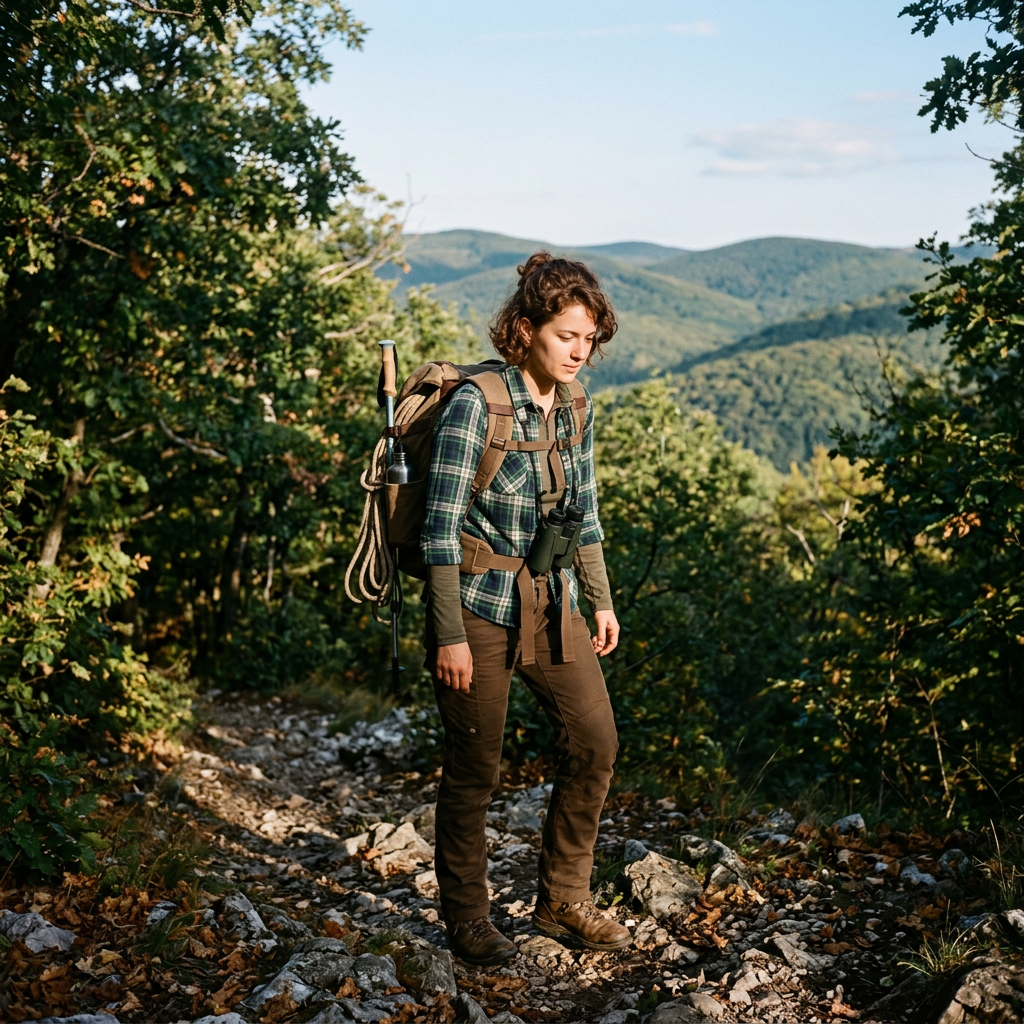
My sister, Zsófi, disappeared three years ago on a hike in the Bükk Mountains. She went alone, the way she always liked to — she said the mountains were the only place she could really think, that nothing disturbed her there except the sound of her own footsteps and the wind moving through the trees. She was an experienced hiker, knew the trails like the back of her hand, went out alone or with friends at least ten or fifteen times a year, and always followed the rules exactly: told someone where she was going, when she’d be back, what she was carrying.
She was two years older than me, and growing up she was always the one who decided what we’d do on school breaks — she was the one who first took me into the woods, actually, walking back from a summer camp, when we wandered off the path to find a waterfall some classmate of hers had told her about, and we ended up walking for hours before our mother finally tracked us down at a forester’s cabin, where a passing woodcutter had brought us in to warm up. She was twelve then, and I was nine, and she never once let go of my hand the whole time, even though she was clearly scared too, just unwilling to show it.
As an adult that same fearless curiosity never left her, it just took a different shape — she studied geography at university, then worked in outdoor education after that, and spent every spare hour in the mountains, as if that was where she recharged whatever everyday life drained out of her. She told me once, over dinner, that in the mountains a person could finally hear their own thoughts, because nothing else was there to drown them out — no traffic, no phone buzzing, no one’s expectations, just the rhythm of your own steps and the wind answering back if you listened long enough.
Her boyfriend, Bence, often missed those weekends, since he would have preferred spending the time together somewhere with a café nearby, but he never once tried to talk her out of the hikes, because he knew that was where she drew the strength for everything else — her work, their relationship, herself. Sometimes they went together, when Bence had the day off, but most of the time Zsófi went alone, exactly like she did that day.
At her job, a small outdoor-education agency that ran hiking and field trips for school groups, everyone loved her, because she always found time to draw out even the shyest kids, the ones stepping off a paved path for the very first time. During the weeks of the search, her coworkers took turns bringing us food, because they knew our family wouldn’t think to cook, and that small gesture, however little it was, made those weeks feel a little more human, when everything else was just waiting.
That morning she texted our mother that she was setting off, and expected to be home by evening. The message never came that night, and by the next morning the whole family was in a panic. Police and mountain rescue began the search that afternoon, though even then they knew every passing hour lowered the odds of finding her alive.
That morning I got a text from her too, a few minutes after the one she sent our mother — a photo of the trailhead signs in the parking lot, marked with the route numbers, captioned “taking the number three trail today, talk tonight.” Nothing unusual in that; she sent me something like it every time she went out alone, because it was our own little tradition — she’d always send a photo of the starting signs, I’d always reply with a heart or a “safe travels,” and that closed the loop for the day until we heard from each other again.
That evening, when nothing had come by seven, I didn’t think much of it, because sometimes her phone died, or she’d be somewhere with no signal. By half past eight I texted asking her to let me know when she got home, but no reply came. At ten I called our mother to ask if she’d heard anything, and that was the first time I heard that uncertainty in her voice that would slowly turn into panic in both of us over the course of the night, as we checked our phones every few minutes, hoping at least a late message would still arrive.
Around midnight our father was already in the car, driving out to the lot where Zsófi had left her car, just to see if it was still there, as if that would change anything about where my sister actually was. The car sat there untouched, the spare key in the glovebox the way she always left it when she set off on foot, and that sight was what finally made him call the police, even though we still weren’t sure it was reason enough to raise the alarm.
The search lasted six weeks. Dogs, helicopters, drones, dozens of volunteers combed the area day after day, and we drove out to the search center every weekend, hoping we could help somehow, hoping to learn something new. My father barely spoke those weeks, just sat at the kitchen table with the maps the rescue team gave him, marking off the areas already searched, as if that brought us any closer to an answer. My mother called the search coordinator every evening, even once there was nothing left to say, just to hear something from someone, anything that wasn’t silence.
The lead handler on the dog team, Károly, who’d worked with search dogs for twenty years, explained every morning where they’d be heading, as if the detail itself might ease the waiting. His dog, a border collie mix named Zorro, kept returning to sniff anxiously around one rock formation that first week, but a thorough search turned up nothing, and Károly said that happens sometimes — mountain wind carries scent in strange directions, and a dog can react to something that’s been sitting there for days.
On the third day of the search we met an old forest ranger everyone just called Old Samu, who claimed to have walked these woods for over forty years and knew every trail, every cave, every spot a tourist would rarely reach. Samu volunteered to help the search team, and spent days leading them through sections not even on the official maps, but never once turned up anything resembling my sister’s trail.
One evening, after everyone else had left the search center and only our father and I remained, Samu sat down with us over coffee, and said quietly, as if he didn’t want anyone else to hear, that there had always been places in these mountains he didn’t like going, because locals said something there “takes a person’s footsteps” — not that someone gets lost, but that the land itself decides who it lets through and who it doesn’t. He said it was just an old story he’d heard from his grandfather, but that he’d seen enough similar cases over the years that he no longer knew how foolish it really was.
“There’s a stretch past the third trail marker,” Samu said, turning his coffee cup in his hands, “that we just call the echo valley, because if you shout there, your voice comes back strange, too long, like it’s not bouncing off the rocks at all, but coming from somewhere deeper. I never liked leading groups that way, and I avoid it when I can.”
I asked if he’d take the search team there too. He said he’d already flagged it, but the terrain was so dangerous and hard to navigate that official protocol required special equipment and permits, which would have taken days we weren’t willing to wait, because every day we lost felt like the one day they might have found her alive if they’d only moved a little faster.
The media picked up the story toward the end of the second week, and two local TV stations sent reporters to the search center. The interviews we gave created a strange split in us — part of us hoped more eyes on the story meant a better chance someone would recognize Zsófi from a photo, but every camera, every microphone held up to our faces made something we weren’t ready to accept feel more real: that this was now an official, public tragedy, not just our family’s private pain.
After six weeks they called off the search, because they’d found nothing — no trace, no backpack, no shoe, nothing that explained where she’d gone. The official report said she’d likely fallen somewhere along a steep stretch, and her body may have ended up somewhere the search teams simply couldn’t reach. It was the most likely explanation, but no one in the family could really accept it, because there was nothing to bury, nothing to put a period on.
In the third week of the search, a group of hikers reported seeing someone who resembled Zsófi near a remote shelter, about twenty kilometers from where her tracks had last been found. Police sent a team out there immediately, and the whole family sat up all night with hope burning — my mother had already started planning a welcome-home dinner, my father smiled for the first time in weeks. By dawn it turned out the woman they’d seen was just another hiker, similar in height and hair color to my sister, who had no idea what chaos she’d caused simply by walking through that area that evening.
That was maybe the hardest moment of the entire search — not the absence of hope, but its flaring up and then dying out, which showed more clearly than anything before how fragile the thing we were clinging to really was. My father didn’t say a word that night, just sat alone in the garage over the maps he’d already gone through maybe a hundred times, searching for something that perhaps couldn’t be found on them at all.
Bence, Zsófi’s boyfriend, barely left the search center those days, even though police had brought him in for questioning twice that first week, since he’d been the last person my sister spoke to by phone the night before, and because — as one officer put it gently — in any case like this, the people closest to the missing person have to be ruled out first. Bence went in willingly both times, and afterward always told us exactly what they’d asked, because he wanted nothing hidden, wanted the family to see he had nothing to conceal.
The night the false identification fell apart, Bence sat with us on the steps outside the search center and admitted he was supposed to have gone with her that day, but canceled at the last minute because of a work deadline that needed him in on a Saturday. He said if he’d gone, maybe they’d have taken a different route, maybe they wouldn’t have strayed from the usual trail, maybe none of this would have happened — and that thought, no matter how much we tried to talk him out of it, never really let go of him, not to this day.
“Every night I replay what would have happened if I’d been with her,” he said then, his voice cracking so badly that our father, who normally never showed emotion in front of others, put an arm around his shoulders and didn’t let go for a long time.
In the fourth week of the search came another, less hopeful development: an anonymous caller phoned the police claiming to have seen a lone woman at night near an abandoned shelter, “acting strangely,” but when officers went out, they found nothing, and the number turned out to trace back to a public payphone that hadn’t been in regular use for years, one they could never connect to any specific person. The tip led nowhere, but the voice — which police had recorded, and which our mother once, in a moment of desperation, convinced them to play for her — sounded so much like a frightened stranger’s whisper that she couldn’t sleep for days afterward, insisting that something in it reminded her of Zsófi, though she could never say exactly what.
Even after the official search ended, we kept up our own smaller one — every weekend we went back to the mountain, retraced trails the official team had already covered, because we couldn’t accept that this was all there’d ever be. We found an abandoned backpack once, not hers, just another hiker’s, lost sometime earlier, and that too was another disappointment, another moment when hope flared and then went out.
A few months after the official search ended, we finally managed to go through Zsófi’s apartment, since her lease was coming up and someone had to decide what to do with her things. Our mother couldn’t face it alone, so the two of us went in together, slowly, as if every box we opened were another goodbye we weren’t ready for. Among her clothes, in a drawer, we found a small leather-bound notebook where Zsófi had logged her hikes over the years — dates, routes, weather notes, and sometimes longer passages about how a place made her feel.
One entry, dated about four years before she disappeared, named that exact third trail marker where her tracks would later break off. She’d written that one autumn afternoon, hiking alone there, she’d felt a strange sensation at the fork, as if someone were watching her from the left-hand trail, and that although she saw nothing, the feeling was strong enough that she hurried on along the right-hand path instead, only slowing again once she’d put a few hundred meters behind her. At the bottom of the entry she’d added, half-joking: “Probably just my imagination, but I promise, next time I come through here, I won’t look back.”
I never showed that entry to our mother, knowing she couldn’t bear it, but I read it over and over myself, trying to decide if it meant anything, or if it was just a mood a lone hiker had imagined into a quiet afternoon. The rest of the notebook held nothing unusual, just ordinary notes on routes and views, a few rough sketches of the mountains she’d draw sometimes when she stopped to rest.
On the first anniversary, one year after the morning Zsófi set off, our family tried to hold some kind of remembrance gathering, more at our mother’s urging than our father’s, who by then could barely stand hearing anyone speak of my sister in the simple past tense, as if it were a closed matter. We gathered at our parents’ house, Bence came too, along with a few close friends, but the whole thing filled with tension rather than comfort — our father walked out to the garden halfway through and didn’t come back until everyone had left, while our mother talked too much about how there must be some explanation we just hadn’t found yet, until Bence gently changed the subject, seeing that no one could take any more of it.
The months after that got harder, because small arguments kept breaking out between our parents, never openly about Zsófi, but always somehow leading there — who had worked harder during the search, who gave up hope sooner, who could sleep at night and who couldn’t. Once our mother snapped at our father that he’d already decided months earlier their daughter wasn’t coming home, and he left the room so quietly afterward that I was afraid he might never come back from wherever he’d gone.
I started hiking alone myself during those months, some weekends, sometimes just for an afternoon, retracing trails Zsófi and I used to walk together as kids, as if my feet touching the same stones hers once had might somehow bring me closer to her. On those walks I often talked to her out loud, telling her the month’s news, our father’s moods, our mother’s strange new habits, as if somehow, among the trees, she might still hear me.
A year and a half after she disappeared, a podcast journalist reached out to us, working on a series about unsolved cases, hoping for an interview about what happened. Our mother leaned toward it at first, hoping wider attention might bring forward someone who’d seen something we didn’t know about, but our father refused outright, saying he didn’t want anyone turning Zsófi’s story into someone else’s entertainment.
In the end our mother gave a short interview alone, by phone, without telling our father everything about it. After the episode aired, strangers sent us messages, most expressing kind sympathy, but a few were painful instead — people sharing their own theories about what might have happened, some with ugly speculations no family still living inside its grief should ever have to read. Our mother asked the journalist not to do a follow-up, and she respected that, though the episode stayed up regardless, and even now, when I search our own names online, it still comes up.
Two years after the search, my father had a heart attack, and though he survived, the doctors said the stress he’d carried since then had surely contributed to it. He talks about Zsófi less often now, as if afraid that saying her name will tear open the wound we’re all still trying, somehow, to close, without ever quite managing it.
During those hospital weeks our mother joined a support group for families of missing people, organized by a volunteer with the county rescue service, meeting once a month at a community center to share a kind of grief that has no proper word — when there’s no funeral, no headstone, nothing to put a period on. At first our mother only went to listen, then slowly opened up, and after a while started bringing me along too, saying it might do me good to hear from others living through something similar.
That’s where we met Ildikó, a woman a bit older than us whose son had disappeared fifteen years earlier in the same mountains, never found alive or dead. She spoke about him calmly, with a grief she’d clearly learned to carry without fully breaking under it — proof, somehow more reassuring than anything else I heard that year, that a person could keep living without ever getting an answer.
One evening, after the rest of the group had left and only the three of us remained — our mother, Ildikó, and me — Ildikó asked if we’d ever gotten any strange calls or messages since Zsófi disappeared. The question caught me so off guard, and fit so precisely with something I’d already started suspecting myself but had never dared say out loud to anyone, that for a moment I didn’t know how to answer. Seeing my silence, Ildikó nodded, as if that alone were answer enough, and told us that about two years after her son vanished, she too had gotten a text on her own phone, from her own number, one she’d never given to anyone, a single word: “I’ll wait.”
“I never told anyone outside the group, because I figured either I was losing my mind, or someone was playing some cruel game on me,” Ildikó said, her hands wrapped around the cup in her lap. “But now that you’ve told me this — or rather, that you said nothing, just looked at me the way you did — I know I’m not alone with it.”
I didn’t tell her about my own messages, because they hadn’t come yet — this conversation happened well before “Listen” arrived — but from that day on, whenever my phone rang at night and I didn’t immediately recognize the tone, Ildikó’s words came back to me, and some part of me was already waiting for something, without knowing what.
I never canceled her phone number. I just couldn’t bring myself to delete the contact, or let someone else end up with that number on a new SIM card in some other city, with no idea whose it had been. I paid the bill every month out of my own account, just to keep it mine, as if that mattered for some reason, as if keeping the line open somehow still connected us, even if no one ever answered on the other end.
Bence asked a few times if I’d reconsider, because he himself, however much it hurt, deleted their shared photos from his phone a year after the search ended, saying it was the only way he could move forward, that the constant reminders held his grief back more than they helped it. I didn’t blame him for it, but I couldn’t think the same way myself, and when I told him so, he just nodded and said everyone finds their own way of keeping alive the person they can’t let go of.
Every Christmas our mother still sets a place for Zsófi, an empty plate, an empty glass, and none of us ever discuss out loud how long this will go on, because we’re all afraid of the moment someone might finally suggest it’s time to stop. After his heart attack, our father could no longer handle the tension of the holiday preparations well, and increasingly retreated to his study even days before the holiday itself, as if he physically couldn’t bear having to celebrate and grieve at the same table at once.
Last fall, on a Tuesday night, at half past one, I got a text from my own phone — from my own number, the one I’ve used for years, not my sister’s, mine, the one I was holding in my hand when the notification came through. It said one word: “Listen.”
I figured it was a glitch, some carrier error, maybe a test message gone wrong, or some joke someone sent after hacking my account. I deleted it and tried not to think about it again, though I slept badly that night. The next day I called my carrier’s customer service, because no matter how hard I tried to think rationally about it, I couldn’t fully let go of the idea that maybe my account had been hacked, or something had glitched in their system. The representative, after checking my call and message logs, said the record showed the text had been sent from my own device to myself, in the same second it arrived, and that technically this was impossible unless I’d set up some kind of automated message myself, which I hadn’t.
I also asked a friend of mine, Petra, who works in IT, hoping she might find an explanation. Petra went through my phone, checked my apps, my settings, even swapped in a test SIM card for an afternoon to rule out a hardware issue. She found nothing, and in the end could only say that either an extremely rare glitch had occurred somewhere in the carrier’s system, one they’d probably never be able to reconstruct, or something was behind it that she simply couldn’t explain in the language of technology.
“I don’t want to say anything crazy,” Petra said, handing the phone back, “but if this came from anyone else, I’d say someone hacked your account. But if you’re telling me no one else knows your password, and the device never leaves your hand, then I don’t know what else to tell you, except to wait and see if another one comes.”
Three days later a second message did arrive, from the same number — my own number — reading: “You shouldn’t have gone right at the third trail marker.”
The third trail marker was where my sister’s last known tracks broke off, at a fork the search team had mentioned in their report, though it wasn’t detailed in the summary made public. I’d never told anyone that, not even the police — I’d only figured it out myself, months after the search ended, on nights I couldn’t sleep, poring over the same routes again and again on my laptop, as if one missed turn could explain everything, as if staring at the map long enough could somehow send me back in time to warn her.
Once I’d worked out the fork, I called the former search coordinator, a calm, tired-voiced man I hadn’t spoken to in years, and asked if he remembered why they hadn’t searched that left branch more thoroughly. He said the team had judged the right-hand trail far more likely at the time, since it led to the viewpoint where Zsófi’s earlier posts suggested she liked to photograph, while the left branch climbed a steep slope thick with forest that even the dogs struggled to cross. He added that they had checked it eventually, but only a quick pass, because their resources were limited and they’d had to make decisions based on probability.
That answer didn’t settle me — it did the opposite. From then on I couldn’t shake the thought that maybe, on the very day we all walked the right-hand trail over and over, Zsófi had been lying somewhere on that left slope, maybe still alive, maybe even hearing the dogs bark in the distance, with no one ever getting close enough to find her.
I called the number back that night, hands shaking around the phone. It rang once, twice, then someone picked up — said nothing, just breathed, exactly the way my sister used to when she was cold, or scared of something, a little faster than usual, like she’d been running before she answered. In the background, very faint, something that sounded like wind, or something close to it, a low, steady sound.
“Zsófi?” I whispered into the phone, even though I knew it made no sense, even though I knew it was insane.
The breathing stopped for a second. Then the line cut off, before I could say or hear anything else.
I set the phone down and sat for a while in the dark room, trying to figure out what had actually happened, or what might have happened if the line hadn’t cut off. I didn’t call back again that night, afraid of what I might hear again, or afraid of hearing nothing at all, which might have been worse.
The next morning I called Bence and told him everything — the first message, the second, the call, the breathing. He listened without a word, and when I finished, after a long pause, said he wanted to believe it was real, but he was afraid that if he let himself start believing, he’d never be able to stop waiting, exactly the way I couldn’t. I asked if he wanted to come with me if I tried again, but he said he didn’t think he could handle it, because his grief had taken a different road, and he was afraid that facing what I couldn’t let go of would drag him back somewhere he’d only just managed to climb out of.
I called Ildikó too, a few days later, and told her about “Listen,” then the second message about the third trail marker. She went quiet for a long time on the other end of the line, and when she spoke again, her voice was strangely careful, like someone weighing how much she was allowed to say.
“After ‘I’ll wait,’ I never got anything else either, no matter how many nights I waited for it,” she said. “But there’s another family in the group, one you probably haven’t met since they rarely come anymore, who once said that after their son disappeared, they got a message with just a set of coordinates, nothing else. They went to look. Found nothing, just an empty clearing. They’ve never spoken about it to anyone else, only told me once, very quietly, like they were afraid that saying it too loud, something might hear and stop.”
That sentence stayed with me for days, because it named exactly what I’d been carrying without ever managing to put into words — that whatever stood behind these messages, maybe it was better not to talk about it too much, too loudly, as if drawing attention to it were itself a risk.
No new message has come since, no matter how many nights I’ve checked the phone, waiting for it to ring, no matter how many times I’ve tried to work out what that first word — “Listen” — could have meant, who or what I was supposed to listen to, and whether I’d done what I was supposed to, or missed something that might still have helped.
One evening, about two months after the call, a name flashed across my phone for an incoming call — not a number, a name, “Zsófi,” exactly how she was still saved in my contacts from before any of this happened — but by the time I answered, the screen just read “Unknown Number,” and when I picked up, all I heard was the familiar disruption tone, that short, broken beeping that means the caller hung up before the connection went through. I didn’t know if it was a software glitch or something else, and no matter how I tried to find it afterward in the call log, that entry simply wasn’t there, as if it had never happened at all.
I told Petra about this too, and again she could only say that, very rarely, a deleted contact’s name can resurface on a call from some cache the phone never fully cleared, but that she personally had never seen it happen in her own work, and that if she read about it somewhere else, she’d suspect the person was just imagining the whole thing.
On a cold day in February I went to see Old Samu too, much older now, but still sharp. I asked exactly where the echo valley was, and when I named the fork — the left branch off the third trail — he said nothing for a long while, just nodded slowly, as if something he’d long suspected had finally been confirmed.
“I knew you’d ask me that one day,” he finally said. “When the dogs reacted to that rock the first week, I already thought we were getting too close to that valley, but I didn’t want to say it out loud, afraid everyone would think we were listening to an old man’s superstitions instead of looking for a living person.”
I asked what he thought was really out there. Samu shrugged and said all he knew for certain was that over the decades at least three other people had been lost on that mountain and never found, and that every case had started at the same three trails, as if the mountain chose the same handful of paths for itself each time.
“I don’t believe in ghosts,” he said, “but I believe there are places that don’t want to give back what they’ve taken. And I think if your sister ever tries to reach you from there, it’s not to call you back to her. It’s to warn you, so others don’t go where she went.”
That sentence haunted me for weeks, because it pointed exactly where my own instinct had already been pointing every time my phone rang at night — that maybe I wasn’t being asked for help at all, but being warned away from something I kept wanting to get closer to anyway, whatever it cost.
Back home, I looked up those old cases Samu had mentioned, and in the county paper’s digitized archive I really did find three short articles, decades apart, each about a hiker lost in the Bükk who was never found. One was from 1979, a college student in his twenties; another from 1994, a middle-aged teacher; and the third, strikingly, only two years before Zsófi disappeared — a woman a few years older than me, whose name, Katalin, somehow sounded familiar, though I couldn’t say why.
The county library sent over a scanned follow-up article saying that days before she vanished, Katalin had told a friend she was “getting strange messages from her own number,” but no one took it seriously, assuming a virus or a hacker. The article went no further, and her case dropped out of the news once the search ended without result.
That detail made the room feel colder than the heating could account for, and I sat in front of my laptop for a long time, trying to decide whether to tell anyone — Ildikó, Bence, our mother — or keep it to myself, afraid that saying it out loud would make the pattern I was starting to see more clearly feel even more real, a pattern I still can’t quite put fully into words even now, even to myself.
But I still pay the bill every month, and I keep the phone turned on beside my bed every night, ringer on loud, because if that phone ever rings again, I don’t want to be the reason I missed it — I don’t want the line to go dead while there’s still a chance, however small, of hearing from her one more time, even if it’s only a breath in the dark.
This spring, six months after the call, I went back to the third trail marker, alone, without telling anyone beforehand, because I knew they’d try to talk me out of it. I started before dawn, still in darkness, so that by the time I reached the lot where Zsófi had left her car three years earlier, the sky would just be starting to gray, because it felt important somehow to set out in the same light she had that morning.
The lot was as empty as it must have been that day, just another hiker’s car at the far end, an old dog in the back seat watching me the whole time I sorted my gear. The start of the trail was familiar by now, I’d walked it so many times since, but the higher I climbed, the more I felt the ground under my feet remembering something I only knew from paper, from maps, from other people’s accounts.
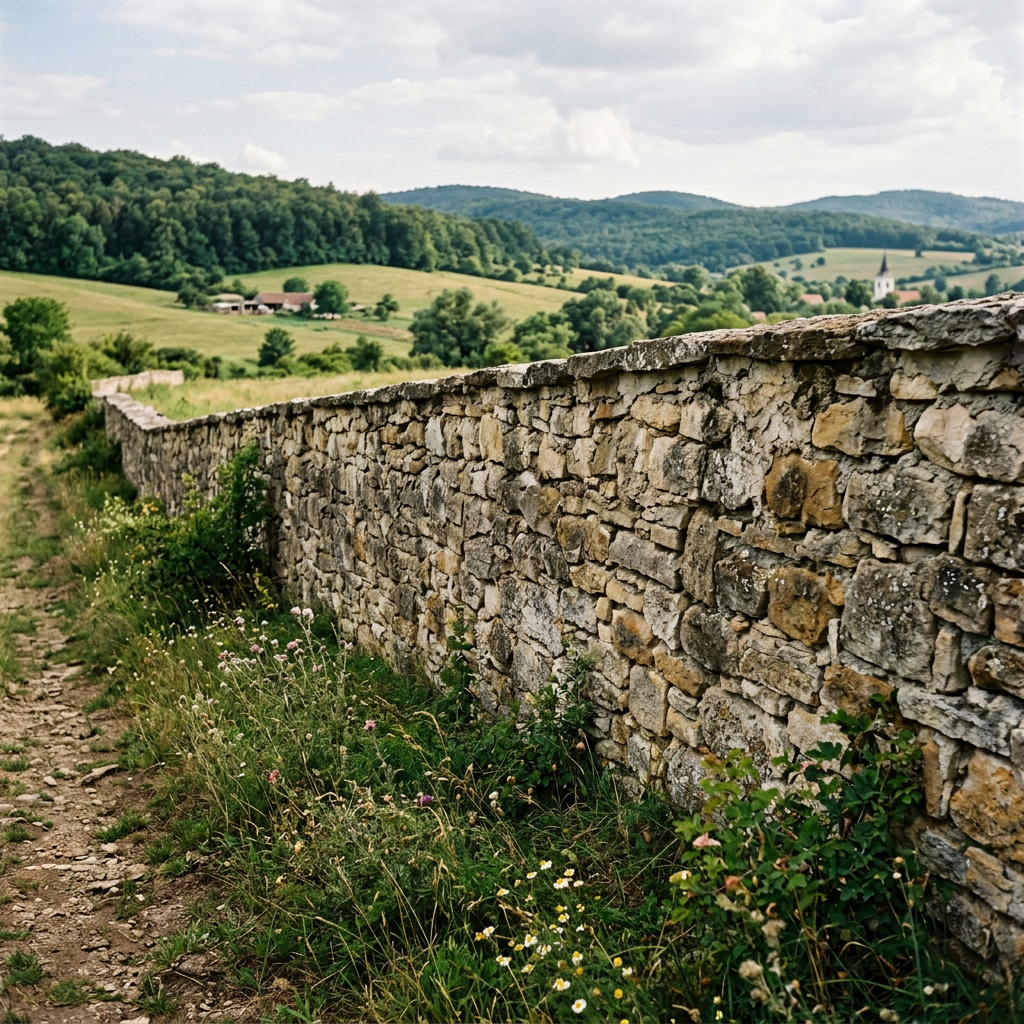
Two hours in I reached the third marker, a blue-and-white painted stone so worn by the years you could barely make out the number on it. I slowed down from there, watching every fork, every broken branch, as if even those carried some message, and when I reached the exact point where the official route bore right, I stopped and looked a long time at the overgrown left-hand trail the search team had only passed through once, briefly.
I walked the exact route the search team’s report described, stopped at the fork where the tracks had broken off, and just stood there for a long time, trying to feel something, anything, that might bring me closer to an answer.
I found nothing. No sign, no trace, just the trees and the wind sweeping across the clearing, exactly like what I’d heard over the phone that Tuesday night. I sat down on a rock and spoke out loud, as if Zsófi could hear me, told her what had happened over the past three years — that our father’s heart had gotten sick, that our mother still sets a place for her every Christmas, that I still pay her bill, because I can’t bring myself to let go of that thin thread, even if it no longer connects to anything at all.
I told her about Bence too — that he still lives alone, that he got together with someone a year ago but they broke up after two months, because, as he told me on the phone, he couldn’t look at his new girlfriend without comparing everything about her to what he’d lost. I told her about Ildikó, and about that other family, the one with the coordinates, and that I no longer know for certain whether I believe these messages mean anything good, or whether they’re just a slower form of the same grief a person carries until they let it go.
The wind picked up while I sat there, and the light filtering through the branches grew dimmer as the sun dropped lower. A sudden cold passed through me, strong enough to raise gooseflesh on my arms even under my coat, and for a moment — just a brief moment — I felt as if someone else stood on that clearing too, not too close, not too far, somewhere beyond the tree line, watching what I was doing without making a sound.
I got up off the rock and looked around, but of course there was nothing there, just the trees and the strengthening wind, and my own breath, which suddenly sounded too loud in the silence. I didn’t speak aloud, just asked in my head whether she was there, whether she could hear me, and the answer, if there was one at all, was only that the wind stopped for a moment, entirely, strangely, before picking up again, stronger than before.
As I started back down the mountain, my phone buzzed once in my pocket. I stopped, pulled it out with a shaking hand, but it was only a network notification, nothing more. I should have laughed, or cried, I wasn’t sure which I felt more, but I just kept walking down instead, letting the disappointment fade slowly, the way it had so many times before.
On my way home I stopped by Bence’s place, because I’d promised to tell him what I found, even if the answer was nothing. We sat down at a bar not far from his apartment, and as I described the clearing, the wind, that strange cold that had run through me, Bence just turned his glass in his hands and said nothing for a while. Then he told me he’d felt something similar once, about six months after the search, sitting alone in his car at that same lot, unable to stand that he’d never gone back.
“I never told anyone, because it sounded crazy,” he said. “Sitting there, for a split second I thought I saw her in the side mirror, in the back seat — then nothing. Sometimes I think we only see what we want to see badly enough that our minds build it for us, just so we don’t have to keep searching.”
I didn’t know how to answer that, because it was exactly the question that haunted me every time I felt something strange — whether grief and hope were manufacturing the signs, or whether something was really there.
Over the summer our mother’s health slipped a little too, nowhere near as dramatically as our father’s, but her blood pressure and sleep problems sent her to a doctor, who mentioned that long, unresolved grief wears on the body, not only the spirit. Hearing that, our mother only said she was happy to carry that weight, if in exchange she still got to feel connected to her daughter somehow, even if that connection amounted to nothing more than an empty plate and a weekly phone call to the support group’s organizer.
In the fall, exactly a year after the first message, late one night as I was getting ready for bed, my phone rang again — not a text, a call, from my own number. I answered, fingers shaking, and for a moment there was nothing but that same deep, steady hum I’d heard the first time, like wind, but deeper, more continuous. I waited, said nothing, and after maybe ten seconds the hum broke for an instant — I was certain, as certain as I’ve ever been of anything, that I heard a very faint, distant sound that might have been my name, though so distorted I could never swear to it.
This time I hung up first, because I couldn’t stand the uncertainty any longer, and simply didn’t have the strength that night to find out which way it would go.
The next day I called our mother, but didn’t mention the call, just asked how she was doing, whether she was sleeping enough, taking her medication. I didn’t want her living with the same uncertainty I carry every night, because I felt like at least this weight was mine alone to bear, since I was the one the messages came to, not her, and somehow that thought — that whoever or whatever sent them had chosen me, not her — gave me a strange, hard-to-explain sense of responsibility I didn’t want to pass on to someone who’d suffer more for it.
Our father’s health has stabilized since then, though his heart will never be what it was before. He takes a handful of pills every morning and goes to bed early, and though he rarely speaks of Zsófi, once, on a quiet Sunday in the garden, he told me that every night before sleep he says one sentence to himself, always the same: “I hope you’re somewhere good, and that you’re not cold.” I didn’t ask what it meant to him, only understood he wanted me to know he too, in his own quiet way, thinks of her every day.
This year, on the third anniversary, we didn’t hold a big family gathering like the first time — just our mother, our father, and me at a quiet dinner, Bence joining later, and no one talked much, but no one walked out of the room either, and that alone felt like more progress than anything we’d managed before. Our mother set Zsófi’s empty plate as always, and this time no one asked how much longer she’d keep doing it, because maybe by now we’d all understood that this has no ending, and never will, as long as we’re alive.
No further call or message has come since, though every night, when I set the phone down beside the bed before sleep, I pause for a second and check the screen before switching off the lamp, as if that brief, silent waiting could somehow signal that I’m still ready, still listening, whatever it is I was supposed to be listening for back when I might still have been able to do something.
Sometimes, when I can’t sleep, I take Zsófi’s notebook out of the drawer where I keep the things I brought home from her apartment, and reread that entry about the left-hand trail, her promise never to look back. I wonder whether she kept that promise on the day she disappeared too, or whether, for some reason, this time she looked back anyway, and if she did, what she might have seen that the rest of us, who walked the right-hand trail so many times, will never know.
Katalin’s case still haunts me, though I’ve never dared look further into it, afraid of what I’d find if I got too close. Sometimes her name surfaces in my head for a moment when my phone lights up with a notification at night, before I realize it was only an app update, nothing more.
Bence still calls sometimes to check on me, and in those calls he never asks about the messages, as if we’d silently agreed that this part is something each of us has to carry alone, however we can. I asked him once if he still thinks of her every day, and he said not every day, but every weekend, whenever he has a day off and doesn’t know what to do with himself, because before, the weekend had always meant being with her, or waiting for her to come back down from the mountains.
Our mother still sets a place for Zsófi every Christmas, our father still says his sentence every night, I still check my phone before switching off the lamp, and Bence still wakes up every weekend with the same absence. I think we’ve each found our own small ritual for keeping alive what we can’t let go of — and maybe that’s what Samu meant about the mountain not wanting to give back what it took. Maybe it isn’t the mountain holding onto her at all, but all of us, with our own stubborn attention.
Sometimes I play with the thought of what would happen if I just stopped — if I stopped paying the bill, turned the phone off at night, simply let the line finally go silent. But every time that thought comes, a stronger one overrides it: that if I stop listening and something comes through right at that moment, something I’d never hear again, I would never forgive myself. So instead I keep waiting, keep paying the bill, keep checking the screen every night before I switch off the lamp, because as long as it’s there in the dark beside me, turned on, I have some sense that the thread still connecting us can’t break just because I looked away for one moment — and that moment, if it ever does come, is one I never want to miss, whatever waits on the other end of the line, whatever sound it carries with it out of the dark.
I don’t know if I’ll ever come across anything that brings me closer to an answer. But I know now that I went back to where it all broke off, and that this, however little it might mean, was my own way of telling her: I was listening. I was finally, truly listening.




Leave a Reply